Showing posts with label collage. Show all posts

Tuesday, 5 January 2021

A winter visit to the Royal Academy Summer Exhibition 2020

 
Picture
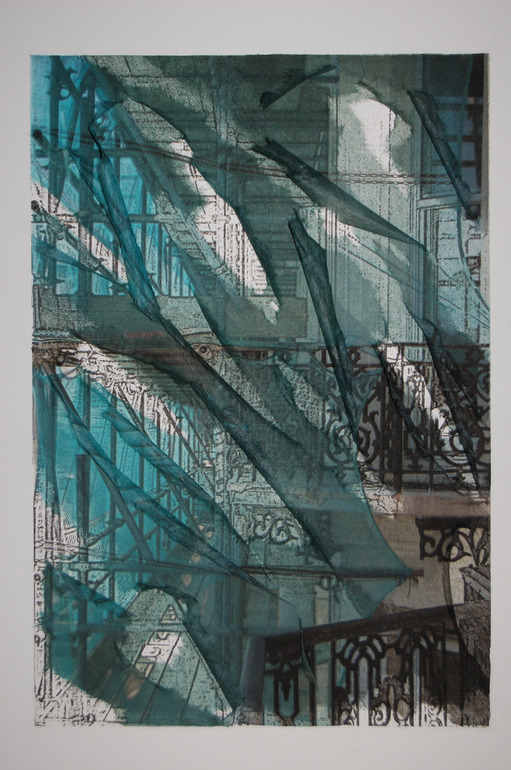
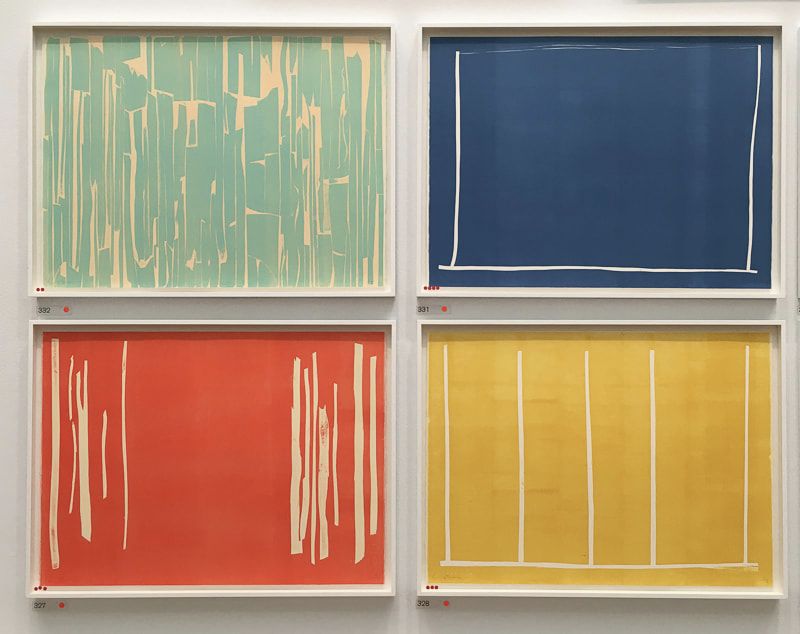
Colour notes | paper relief prints| Christopher Le Brun PPRA

Be grateful for small things.
That is my new motto. As more and more is taken away from us due to Covid-19, it is the little things that matter.

My other half (OH) and I have been holed up together for a very long time, and a chance to make a trip to London to see the Summer exhibition at the Royal Academy was a rare treat.

Our tickets had been previously cancelled due to lockdown, so this trip was all the more anticipated by our culture starved selves.

So on a rainy December Monday we crept up to London on the quiet mid day train, walked the empty streets of Picadilly, and made our way around the exhibition in our masks.


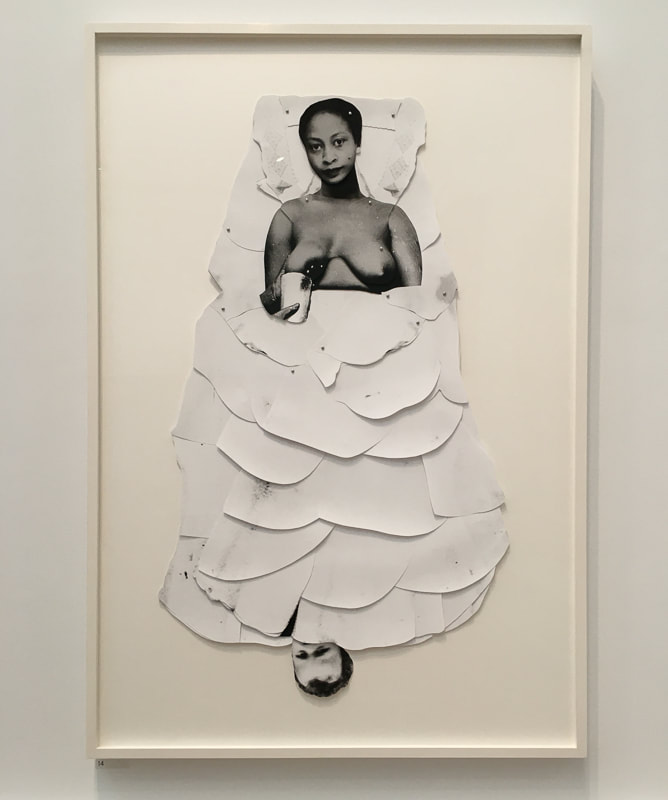
The first work that caught my eye was a collage.
Picture
Untitled | collage with paper pins | Frida Orupabo


Frida Orupabo is a Nigerian-Norwegian; one of several invited black artists on show.
I had to do some research to fully understand what Frida was trying to convey. According to her website;
'Frida Orupabo is a sociologist and artist living and working in Oslo, Norway. Her work consists of digital and physical collages in various forms, which explore questions related to race, family relations, gender, sexuality, violence and identity.'

Heavy stuff for starters. Race and politics. I had been attracted to it as I was thinking about collage, and how so much can be said with a few pieces of paper reaaranged on a page.

OH had already disappeared off to view the galleries at his own pace. Conscious that 'lunchtime' was the most important item on his agenda I resolved to move at a reasonable pace, and stop only at those works that really caught my eye.


Picture
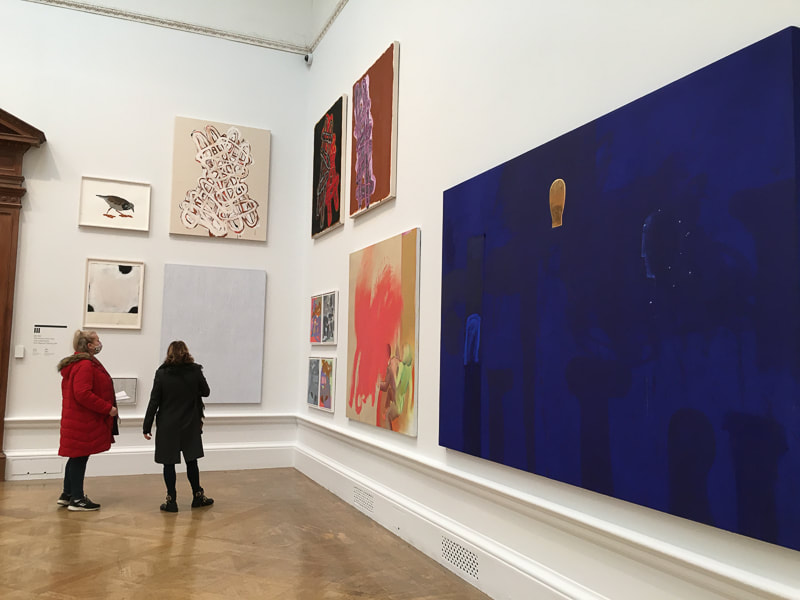
Socially distanced viewing at the Royal Academy Summer exhibition 2020


It was a treat to have so much room to view.  The galleries never felt crowded, and I felt completely safe.

The fact that the following day we were thrown into Tier 4 made me realise how lucky we were to have made the trip.


Picture
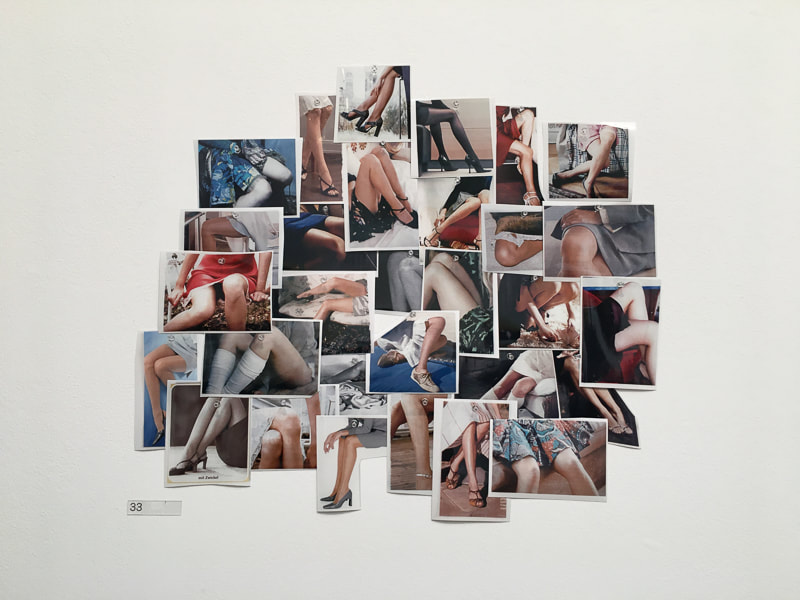
Legs | photographs | Hans Peter Feldmann


Legs caught my eye next. No frame; just some photos stuck to the wall.

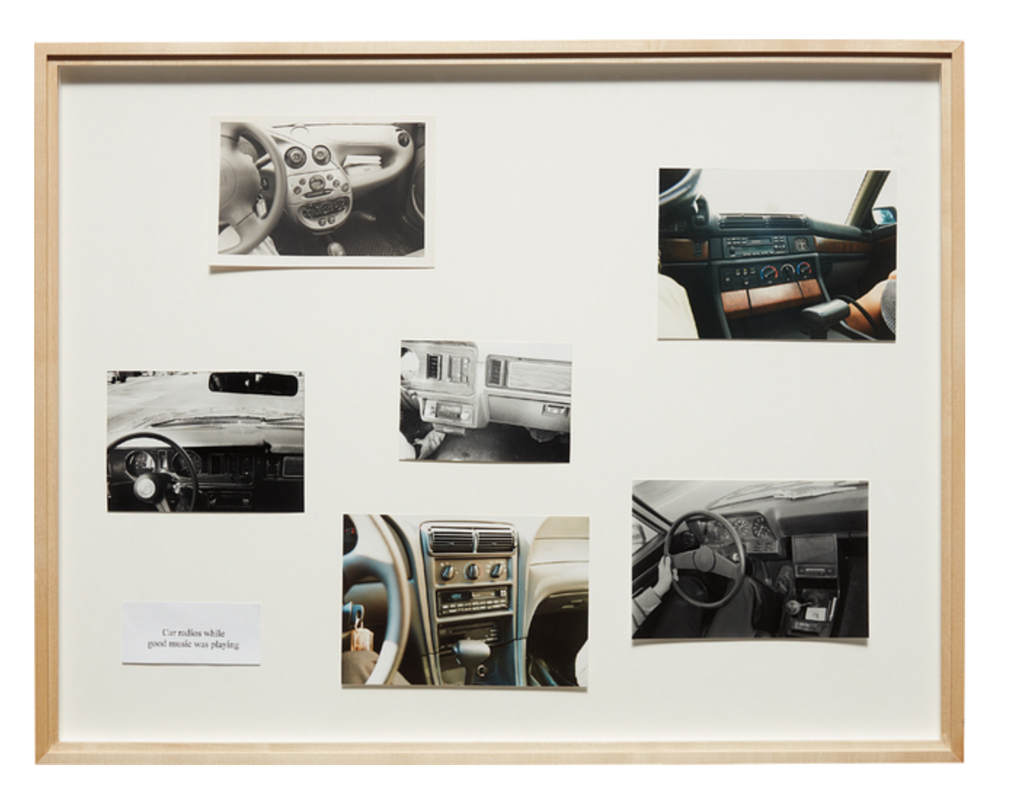
As a conceptual artist Hans-Peter sells similar works for $20,000, so he is doing something right. Further research about him led me to another work of his that confirmed a dry sense of humour; something I cannot resist...
Picture
Hans -Peter Feldmann | Pictures of car radios taken while good music was playing | 2004
 

In 2010 he won  the Guggenheim Hugo Boss art prize. He celebrated by pinning the £100,000 prize onto the gallery walls as 100,000 $1 notes, raising questions about the value of art.

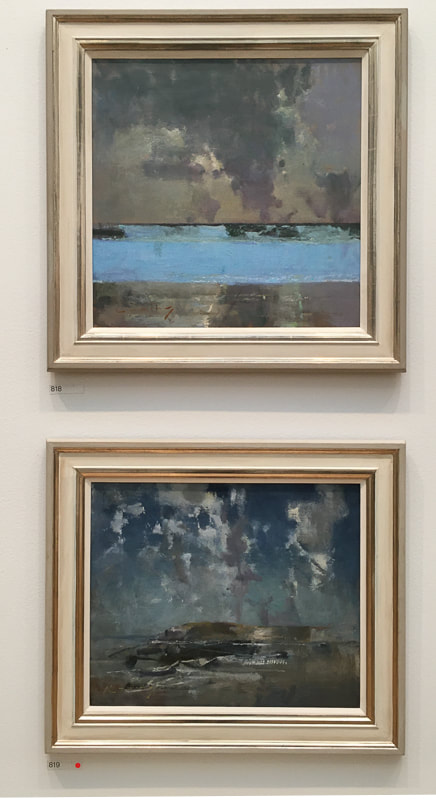
It was good to see paintings by Fred Cuming from the Rye area and Camber Sands.
His work is immediately identifiable to me after getting to know it in local Rye galleries. He  visited my studio on an open studio visit a few years ago, and is a truly charming gentleman who has a way with clouds.....

Picture
Paintings by Fred Cuming RA


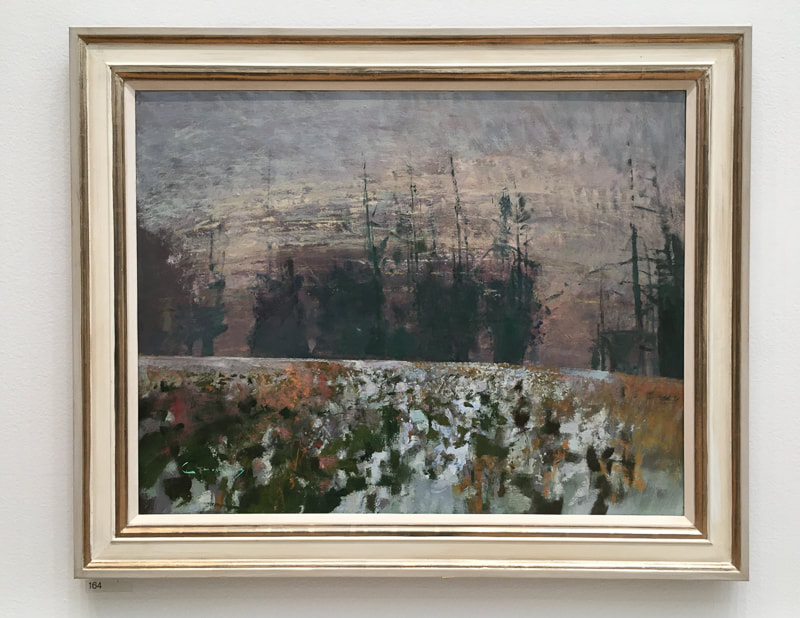
I particularly enjoyed his painting of a February peasmarsh landscape, with its low wintry light.


Picture
February landscape, Peasmarsh | Fred Cuming RA


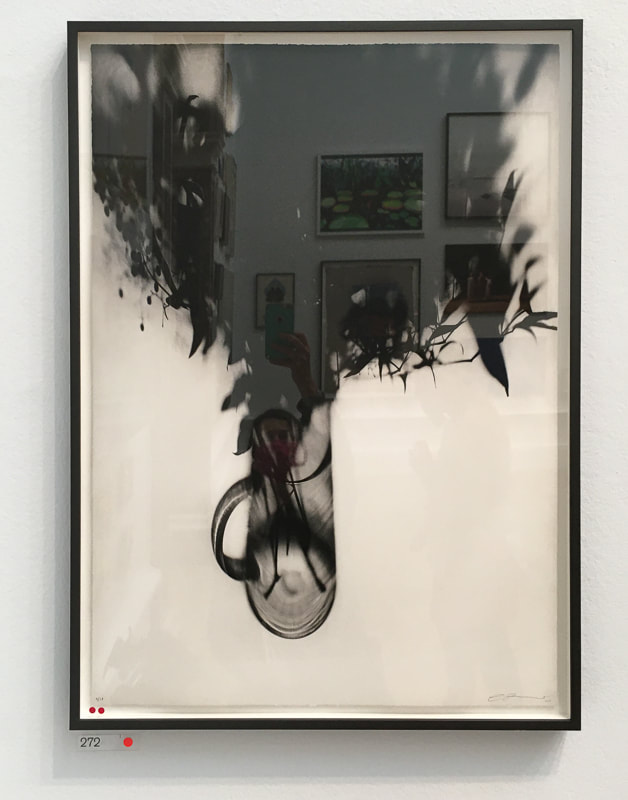
I also fell in love with a series of works by Cornelia Parker RA. These were a series of polymer gravure etchings based on the shadows of simple objects such as flowers and household objects, captured on light senstive paper.


Picture
Jug full of shadows | Cornelia parker RA | 2020
OH had 'done' the show in the blink of any eye.

His favourite was a work ' where you can see what it is.....'

I have no problem with that. It seems a lot of other visitors felt the same way,

Picture
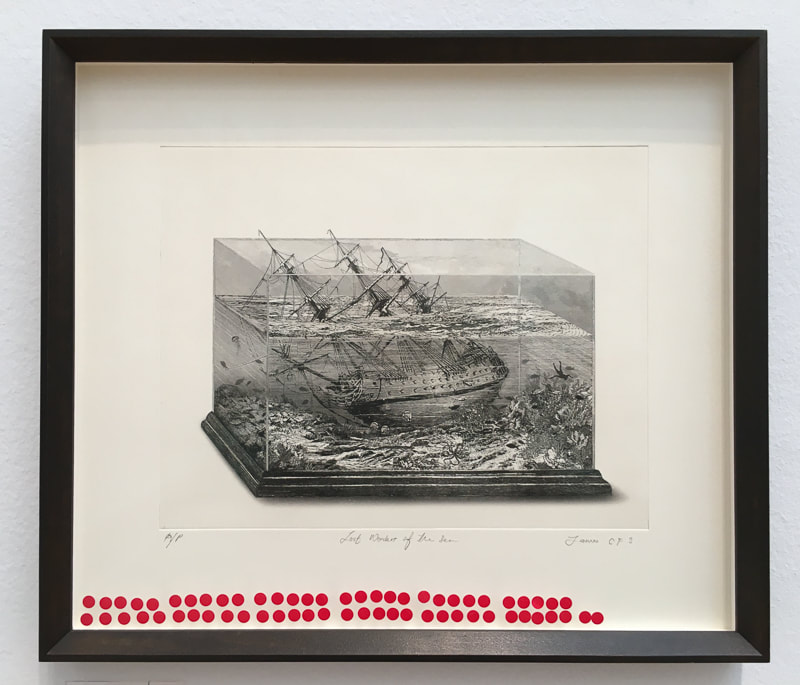
Fuen Seow Cheen | LOST WONDERS OF THE SEA | Etching


There were a lot of dogs and portraits.

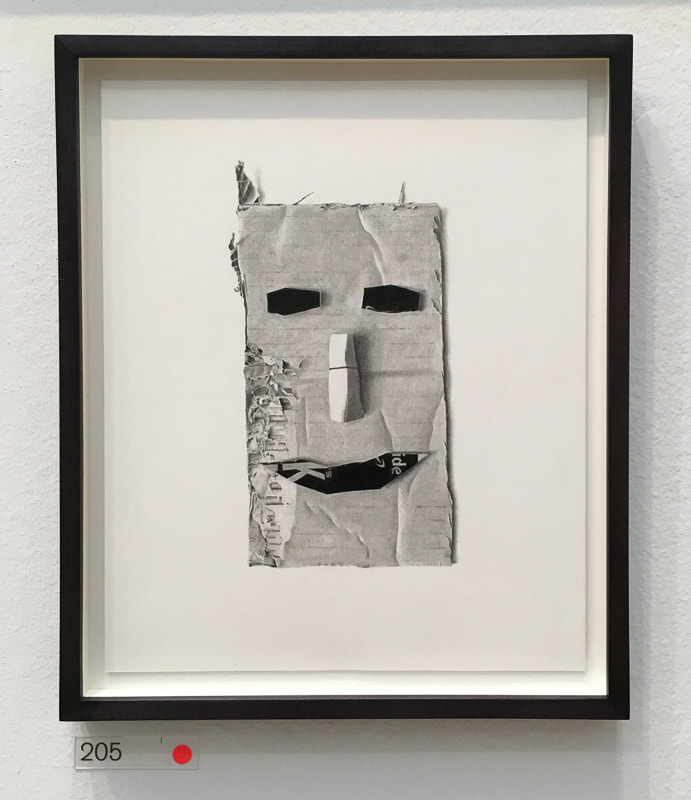
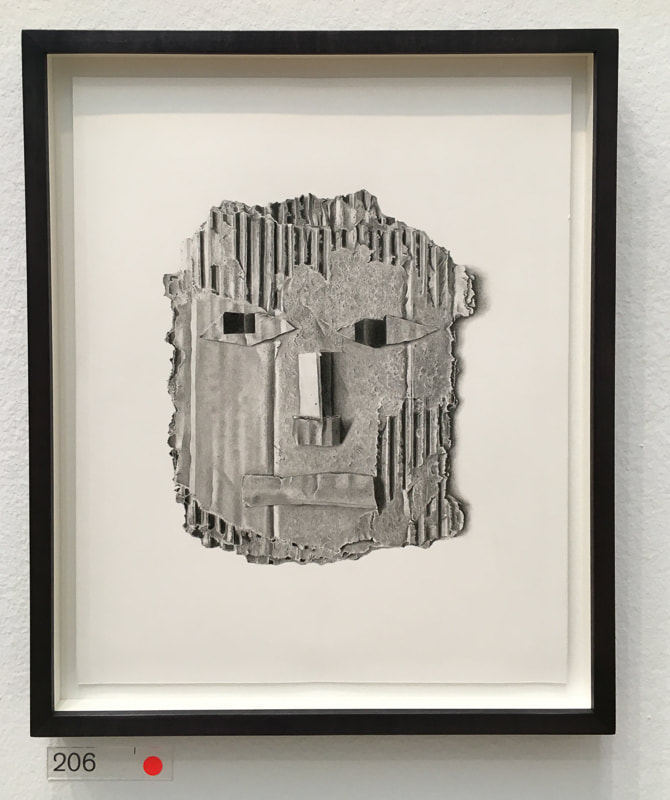
My favourite portraits were pencil drawings of cardboard faces by Russell Herron.

I had to get really close to see that thses were drawings and not cardboard collages. Sadly all sold.


Picture
Cardboard portrait 12 | Russell Herron
Picture
Cardboard portrait 11 | Russell Herron


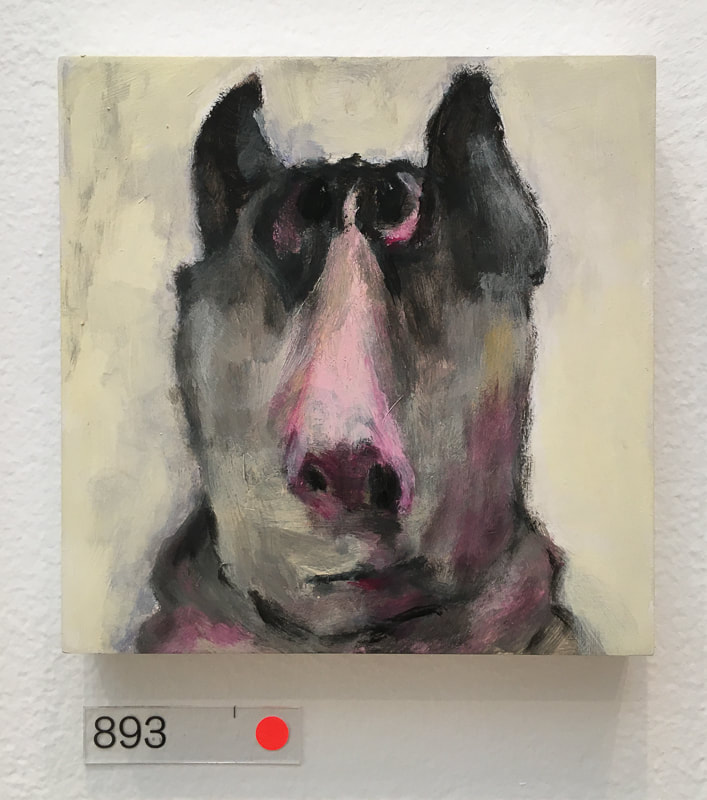
I was also taken with a dog portrait by Ilona Arndt. He had so much more character than the standard labrador poses.
Picture
Hund NR 2 | Ilona Arndt


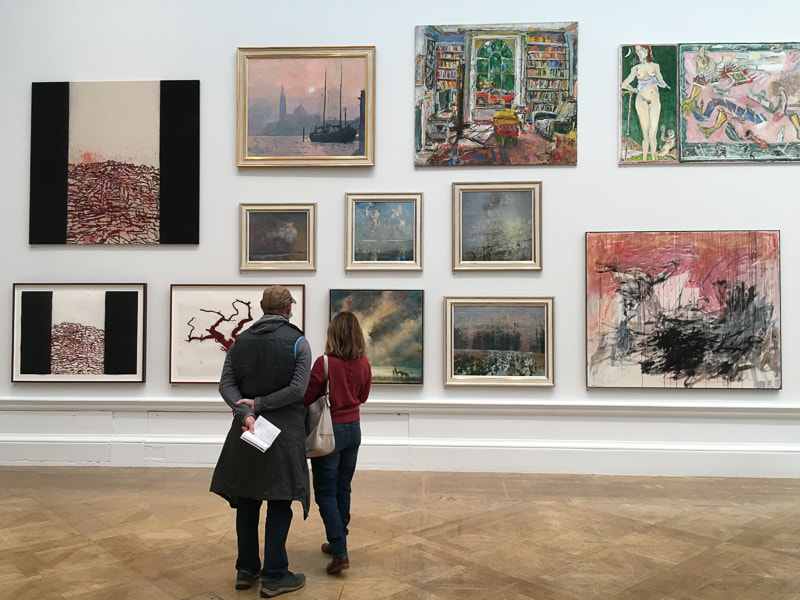
But lunch was beckoning.... there was too much to take in, as always.

Picture
Too much to take in at the RA Summer Exhibition


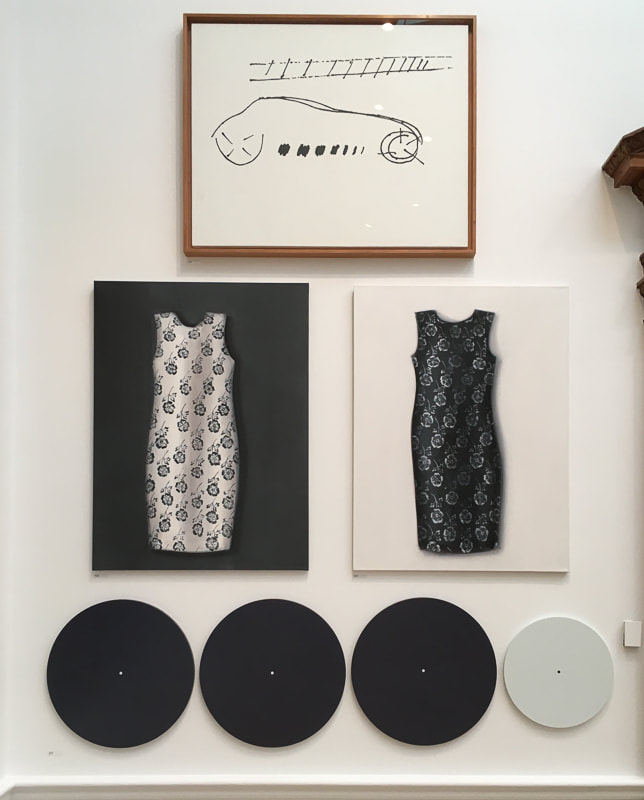
Different galleries had very different characters.

I enjoyed this quiet monochrome corner.


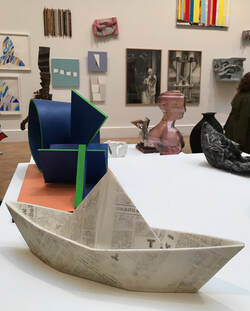
But if I had been allowed to take one work home it would have been a newspaper boat made of stone.

A playful sculpture.

A reminder of childhood days spent by the sea. Dreams of adventure.

I forgot to record who made it, so apologies for that.

Picture
Looking at the Curator's selection I realise that there is so much work that I didn't even look at.

It is an overwhelming exhibition always.

But for one who had not looked at any new art for several months it was a welcome diversion, and a reminder that everyone has different taste.

Lunch was good!

Saturday, 25 June 2011

Collography, collodion and dechirage.................at the East Sussex Contemporary Art fair

The last few days have been immensely busy; a graduate show at Central St Martins , followed 24 hours later by the East Sussex Contemporary Art show; two very different experiences, in which the biggest lesson learnt has to be that people like free stuff, and that very few people outside the photographic community understand what a "C-type" print or an "archival digital print" are.

Much of my work is abstract, and not instantly recognisable as a photograph, so I tried to give details that would make this clear; but maybe not clear enough. My work "Daydreams 2" (below) has attracted the most attention on my stand at the art show, and although derived from a photo of reflections in a stream, is sufficiently far removed from the original subject after manipulation to confuse the viewer into believing that what they see is not a photograph. much of my recent photographic work has involved layering and collage, and this is an example of the use of symmetry in the layering process.


Daydreams 2    (copyright Caroline Fraser 2011)

 Understanding other artists techniques is always a challenge; I have been learning about collographs and dechirage, after admiring the work of Ali Stump, printmaker and Fizz Fieldgrass respectively,at the art fair.

collographic print by Ali Stump
Collography is, according to Wikipedia;

 "a printmaking process in which materials are applied to a rigid substrate (such as cardboard or wood). The word is derived from the Greek word koll or kolla, meaning glue and graph, meaning the activity of drawing, which could explain the common misspelling collagraph. (Adding to the confusion, a photo-collagraph is a term to refer to any type of collotype photographic print.)


The plate can be intaglio-inked, inked with a roller or paintbrush, or some combination thereof. Ink or pigment is applied to the resulting collage, and the board is used to print onto paper or another material using either a printing press or various hand tools. The resulting print is termed a collagraph. Substances such as carborundum, acrylic texture mediums, sandpapers, string, cut card, leaves and grasses can all be used in creating the collograph plate. In some instances, leaves can be used as a source of pigment by rubbing them onto the surface of the plate."

This is not to be confused with the wet plate collodion process used in photography, used to stunning effect by one of my fellow students at Central St Martins Jonny Weeks in his portraits of blind people.

Ali Stump creates her prints using cardboard, and they have a beautiful simplicity to them with unusual, almost child-like perspectives of everyday objects.

Dechirage is almost a reversal of collage, being a process of removal rather than addition. Fizz Fieldgrass creates delicate sculptures using source images such as photographs as source material, which are then printed onto fabric, built up in layers, and then torn away to create delicate three dimensional images.


example of dechirage by Fizz Fieldgrass


Fieldgrass has a background in sculpture, and his use of textiles and Japanese papers was a source of admiration for many seeing his work this weekend. The main concern by visitors was how long the work will survive, given the delicate nature of the work; a currently  unanswered question.
dechirage by Fizz Fieldgrass


Monday, 28 March 2011

Big is beautiful ; collage and diorama in contemporary photography. get out your glue stick!


Cherry Blossom by Hiroshigo
 Two exhibitions in one morning. A rare treat.  To see the works of Emily Allchurch and Sohei Nishino at Diemar-Noble and Michael Hoppen galleries respectively. The main purpose of the trip being to explore photomontage or collage as a medium in contemporary photography. Having seen images in newspaper magazines of both these artists work, I wanted to see them for real.

There is a Japanese connection here. Sohei is a young Japanese photographer who creates dioramas of cities using a painstaking methodology. Emily Allchurch's exhibition 'Tokyo Story' consists of digital photomontages that re-create the works from Utagawa Hiroshigo's  'One Hundred Famous Views of Edo' (1856-58); Edo being the former name of Tokyo.

I was drawn to Allchurch's work by the cherry blossom, as it is currently flowering in the streets around my home.

Cherry Blossom by Emily Allchurch
It made me think of my trip to Japan, and the current devastation that the Japanese are experiencing . I understand  that Hiroshigo's famous work 'the wave' is actually of a tsunami wave, which makes it all the more poignant.Her images are  in stark contrast to the views that we have been witnessing in the news. Allchurch's images are composites, created digitally from a numerous photographs to produce a recreation of the original, but set in a contemporary idiom. The images are large and striking, some as prints and some as transparencies on lightboxes, which I felt worked less well, as they didn't have the same feel as the originals. Much of her work is inspired by paintings, and she comes from a background in fine art. A previous series 'Urban Chiaroscuro' was based on the work of Piranesi , and re-created his views of prisons in a similar way. She works with a small digital camera collecting hundreds of images that contain the elements that she needs for her re-creation of the original, together with modern motifs and signage to emphasise her modern vision of the original.

Lotus Garden by Emily Allchurch

detail from 'Lotus Garden' 

I was interested to learn that nearly all of her work is based on the work of other artists, and this fits with my finding that inspiration comes from many sources, both visual and written. When I attended a course on 'How to be a successful artist', the importance of finding time for visual research was strongly made. Creativity comes from hearing and seeing new things, and we were encouraged to timetable a regular slot for this into the working week. Having seen how attending a performance poetry evening enabled me to write a poem this week, I am convinced that this is true. One of the issues that her work raises is 'what software does she use'? I watched a video of her at work from a BBC programme 'A digital picture of Britain' 2005, and can see that she cuts out small parts of many images and joins them together, layering them over the source image to match the original. I certainly don't have the skills to do this at present, but would like to explore the possibilities further.

The second exhibition, of Sohei Nishino's dioramas at Michael Hoppen was more exciting visually; the enormous dioramas of London and Japanese cities in black and white are well worth seeing, being 230x120cm composites created by glueing hundreds of black and white analgoue photos that are all developed by the artist and then glued onto a large white board. The final image is re-photographed using a Hasselblad with digital back, to create large prints that are selling like hot cakes for thousands of pounds.


detail from Nishino's work


The London diorama in editions of 5 large and 15 smaller prints were sold out before the current show had opened. I enquired how much they are and was informed that the price increases as the edition gets nearer to being sold out, and that prices of up to $60,000 were  paid for his New York diorama. It seems that he now has the potential to get rich, as there are plenty more cities in the world. Each one takes several months to make. First he walks the city for about 6 weeks, taking 300 rolls of film. 10,000 pictures are narrowed down to around 4000 to be used for the diorama. The images are all 3;2 and left in this format. He builds the images up from the bottom, and appears to use a glue stick . They all have sky at the top, but also some around the key structures such as the gherkin and the London Eye, which helps them to stand out. The London diorama was the only one on show in which the images appear to have been tinted, giving the feel of an old London Map. The entire London map can be seen at Nishino's website


detail from an old map of London


He has also made two colour dioramas of imagined cities entitled 'Night' and 'i-land', which contain amusing details such as fish in aquariums, and which have a dystopian feel to them.


'i-land' by Nishino at Michael Hoppen Gallery


I showed postcards of the works to my family at lunch and they much preferred the dioramas; I have now been commissioned by my daughter to create one of Brixton Town Hall. I can think of worse places to start.

I have already tried creating digital montages. The challenge now is to do something as exciting as the works I have seen today. My rhubarb certainly doesn't have the same appeal, except perhaps to my other half.

'Rhubarb' by Caroline Fraser

The overiding impression was that 'big is beautiful', and that I need to 'think big'. It is possible to create big images by combining many smaller ones without the need to go large format. I was suprised to find out that Allchurch uses a small digital camera for much of her work. There is a lot of pressure to move up formats on the course, and I don't feel I could justify spending £10,000 + for a digital Hasselblad until I can recoup some of the costs ( I learnt today that Hoppen has helped Nishino with equipment costs, and I imagine that they feel the investment paid off).

Diemar Noble Gallery

Michael Hoppen Gallery


Wednesday, 2 March 2011

working with the weather

Today I have to get on with taking some photos. I have two plans for the day, neither of which I can currently execute because the weather is wrong; I want to try a collage of some houses in my road, but would like a little bright light. Failing that I really want to try getting some more shots in the rain, but the forecast today is for high pressure. Such is life; I also tried to get a video of the dog speed-eating her breakfast, but the camera was cold from being in the car, and steamed up at the critical moments; will try again , but sadly can't give the dog two breakfasts!

Having been to Andrew Watson's talk on Monday about the Segsbury Camp project, I now understand why he mentioned researching glue when I mentioned my interest in collage; he has been there and done that. I could, of course, create digital collages, and there are even websites that will create a Hockney polaroid effect for free on any image that you choose, but having tried it on a couple of photos decided that there was no creative control whatsoever.  Andrew's work with an archeological site involved using a camera on a pole taking aerial views of the ground, something that has also been done to good effect by Andreas Gefeller in his studies of empty buildings in Japan and Dusseldorf. Both photographers have used extremely methodical techniques to create exact plans of the ground; my plan is to be less mathematical and possibly to experiment with scale on a vertical and horizontal plane.

I was amused to see that Andrew's work was displayed in large plan chests, in a similar way to work that I didn't understand at Elusive. This confirms for me the importance of understanding the intention and background of the work; Andrew's use of chests seemed entirely appropriate and practical, in allowing the viewer to get really close to the images despite the entire work being enormous. If I had been asked to look at them without knowing anything of how or why they were there I would probably have passed them by.

www.arch.ox.ac.uk/segsbury-camp.html

 www.andreasgefeller.com/supervisions/works_since_2005