Showing posts with label printmaking. Show all posts

Tuesday, 30 June 2020

lock down life.... part three.... playing at printmaking


We have survived more than 100 days.

OH ( my other half) and I. Together, like never before.

Day after day.

Meal after meal. Walk after walk. Episode after episode of Breaking Bad.

Waking when the birds wake us.

Sleeping when the day has been worked through, minute after minute, hour after hour.

We are still here. Still friends. 

Easing out of lockdown carefully.

OH itching to fly south to see sun and the Mediterranean. Cold beer and a pool.

Me itching to fly to Vancouver to see my children, but unwilling after all this time to spend two whole weeks in enforced isolation in a hotel room before being reunited. Not to mention travel insurance issues.

We have explored Kent.

Taken long walks in the countryside.


strawberry farm, kent

Seen apple and cherry orchards and soft fruit growing in huge greenhouses.

Who knew that strawberries no longer grow in the ground?


strawberrry farm

We found quiet corners away from the perambulating suburban crowds.


a quiet corner of Kent


And last week even found a pub selling real ale, to be consumed on a grassy field across the road.


Things are looking up.


So what has been achieved, artistically, in the last 4 weeks of lockdown?


Mostly very little, with a couple of forays into monoprint and chine colle.


 monoprinting in the garden


With the encouragement of Nick Archer's on-line art classes I tried making monoprints using oil paint, a roller, an acetate sheet and some A4 paper.


Paint is rolled onto acetate or glass, then marked by drawing in the paint, masking it with paper, or pressing on the reverse of the A4 paper once it is placed over the inky acetate sheet.

Messy, unpredictable and mostly fun.

I soon had a large number of inky prints around me , and nowhere sensible to dry them.


It started to rain. The wind was blowing them around the garden.

So they ended up on the floor of my home studio.

Filling it completely.

monoprints drying on the floor


These being oil paint, they take a good week to dry.

More time than I could tolerate really. I had wanted to chop them up immediately and make little books with them.


I ended up with just a couple that I really liked.

The one below I called 'pointless'.

Because that was how I was feeling.

'pointless' monoprint

I would like to make a series of 'pointless' prints.

That really appeals to me now that I have given up work and am locked down, doing nothing of great use.


The following week's lesson was monoprint with chine colle.

Chine colle is a form of collage where fine paper is bonded to a print during the pressure process. In traditional printing the pressure of the print creates a seamless transition. For the purpose of this class, and in the absence of a press, we were to use glue and hand pressure.


Here is an example of a print with red tissue chine colle


I wanted to add some sea creatures and fossils to my prints.

I sourced some public domain images from the Harvard University, Ernst Mayr library archives
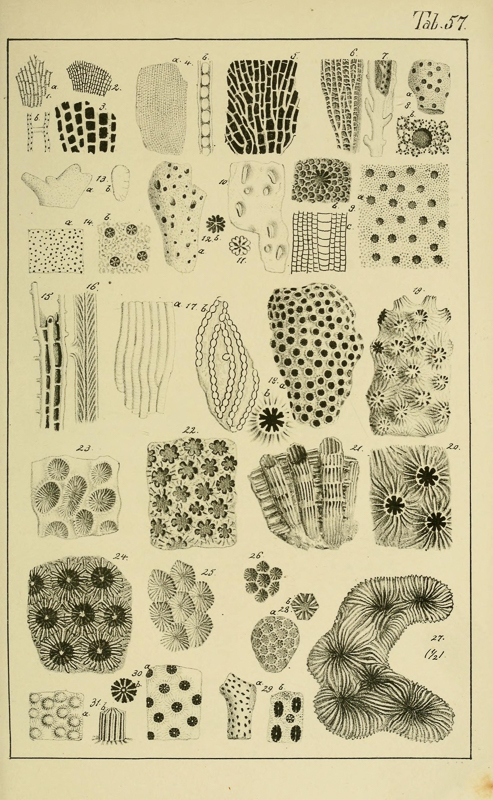


I printed these on thin paper and cut out some shapes, along with some birds from my own archive.


monoprint with chine colle
Mostly the fossil shapes disappeared into the ink, as in the image above.

The birds were a bit more successful when their wings didn't tear off as I tried to apply the glue.


I need a lot more practice, and a real printing press (of course....).


So I tried simple landscapes. Masking areas of the paper with torn newspaper.


just a monoprint


Later I cheated by adding a bird digitally.


monoprint with bird


Next I tried two crows chosen from my photographs from India. Crows seem to be everywhere that I go.

I dropped them into a scene as if landing on rocks.


the landing | monoprint


I was happier with this one, so printed it onto Kozo paper, mounted it onto a board, and coated it with beeswax.

The wax coat is a risky process involving  melted wax and a hotplate in an upstairs bedroom. I was VERY careful.


melting beeswax for wax encaustic overlay

baking tray waxing station


The final product is now waiting for a frame.


the landing | a waxed print


Lastly I went a bit experimental in Photoshop with another print.

This time I layered it digitally and added some colour.

It is no longer a real monoprint.

But as I am now 'an artist', I have decided that I can create work in the way that works best for me.

And if others enjoy it, then I won't feel quite so 'pointless'.

And that will be a good thing.
the dive | a layered monoprint

Thursday, 21 July 2016

Time to learn art speak.... in which I start a new chapter

from 'Revealing Something new' by Anita Carnell
what do you see here?

raindrops from heaven?

a broken sun?

beads on black?

gold thread on leather?

It is by Anita Carnell and represents 65 hours of work. Anita's work is an abstracted reimagining of the historic traditions of gilded leatherwork.


'Revealing Something new' by Anita Carnell
I only know this because I talked to her and she explained her processes and ideas to me.

Which gets me thinking about how we interpret art, and different levels of meaning.

I spent an hour or two at the MAVA (MA visual arts ) show at UAL, Camberwell this week, and inside my head a little voice kept saying

what would OH ( my other half) say about this?


There were no artist statements and there was nothing in the catalogue to explain any of the work. It was only by talking to the artists that I could understand the work.

If the artist wasn't there, I couldn't ask the questions.

So I thought about what OH would say instead.

First some prints by Grizelda Kitching.

Add caption
'why isn't it finished'?


 'no idea what that is'

  is it the boiler?


 'compost on a book art course?

  are you serious?

  I can't repeat what else he said.


Recycled coffee capsules by Xiamiao Wu


    nouveau

    i wouldn't buy it 


Printmakers Council Award winner 2016  ....

Fractal series by Inma Berrocal


spotty; is it the seawall in Camber


You get my drift.

Conceptual art is difficult to understand unless you speak the language.


This author of this piece by Lena Wurz (below) has been awarded the London Centre for Book Arts Residency Award.


I would really like to know what it means. I am guessing that it is something about materiality.


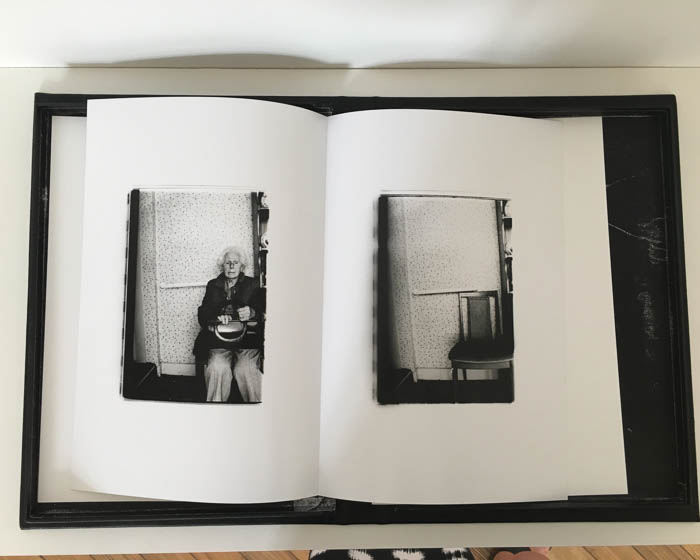
I got on better with Charlotte Rimmer's very sensitive series about her grandparents frailty. A few words underneath the title of this work were enough to allow a good understanding of the sense of loss that dementia brings to those still living in the present.


Then there was work about air pollution in China. Not too hard to get.

Printed on beautiful textured paper.


I also had no difficulty with the small and playful book by Ling Li titled

'The person taking the photo is also being photographed'


After all this intense trying to 'get' stuff I went for a cup of tea.

Obviously I wished I was a student.


My favourite work in the show was by Clara Duran.

'Hail Radiates across the Ripple" 


I didn't fully understand it until I watched a video about the making of it later in the day.


So much underlying meaning.

And lovely to discover how she works in such a conceptual way.


So lovely that I went home and got my portfolio together and went for an interview to join the MA book arts course.


They offered me a place.

I accepted.

I will learn how to talk art speak.

And then I will try to teach it to OH.

It might take a while.....

Sunday, 2 September 2012

blog for blog's sake


Reeds, Rye Harbour © Caroline Fraser


Exactly what is this all blogging business all about?

Having run dry of inspiration and enthusiasm after a particularly exhausting month at work, looking after the shop while everyone else sits by their pool in the sun, I find that the stats for my blog are not looking good. It seems that taking a rest is not an option if you want to maintain good readership numbers.

My monthly visits had been climbing inexorably since this blog got started, but then drop to almost zero just because I couldn't  sum up the enthusiasm to put fingers to keyboard for a whole three weeks. I should have prepared articles for release during this time to keep the readers happy and the visits coming.

But I didn't, and so I find myself in a quandary, wondering what all of this is for............

and whether I should carry on.........

Answer?

I believe that it is a personal diary of the kind that I used to keep locked with a key under my bed, and which is now lost forever. I have no idea where all my childhood diaries are. Nor, for that matter, what was written in them. At least with this blog, I can commit it to paper at any time that I choose, and leave traces of my life for those who might possibly be interested. It is not a personal, secret collection of thoughts but more a record of my photography and how my daily life impinges upon it.

Inspiration for new work requires effort; visiting galleries, reading, going to new places. Deadlines are needed to force the production of work. Writing allows time for reflection, and this blog allows that time. All of this has been a challenge in the last 4 weeks. A recent trip to Northumberland was devoid of inspiration and light; every time I had time to visit the wheat fields with their abstract forms of machinery tracks on the hillside the sun went down. Trying to combine photography with a  family holiday is not the way forward.

Brassicas by Shelley Rose
The Leek by Shelley Rose
Yesterday I popped into the September Art Exhibition in Wadhurst to see the works on show, and in particular to see more of the work of Shelley Rose, the photographer and print maker whom I first met at Central St Martins.

His new still life series is printed on gessoed canvas.


What is gessoed canvas?

According to Wikipedia it is a mixture of paint, chalk and gypsum, used in art work as a base for use on wood, canvas or other surfaces.

The effect in Shelley's still lives is masterly; light and delicate, yet at the same time having the appearance of something created long ago. It is always tempting to try new ways of producing images, but this method, I am sure, is beyond my capabilities at present. How does he print on canvas? How does the printing process cope with fabric? Shelley has many years of experience of print making.

A quick search of the web gives some ideas on how to transfer images at this blog "More than Photography" that discusses experimental photographic techniques.

 If  the 10,000 hours theory of becoming an expert in a particular field suggested by Malcolm Gladwell in his book "Outliers"  is true, then I probably have a way to go. 10,000 hours of practice, at 10 hours per day, 5 days per week equates to around 4 years of continuous work, without breaks, and without holidays, so more realistically I would think 5 years of full time practice. And does this just apply to straight photography or does it include branching out into printmaking with other media?


I need to give up work. I am counting the days.

Meanwhile I am preparing work for the Pure Autumn Arts Fair  in Battle. My image above of reeds at Rye harbour that I have just had framed has received a mixed response, from great enthusiasm to a statement that "there is nothing for the eye to settle on" to "it needs to be turned on its side and then it looks like a pond". Ah well, you can please some of the people some of the time..............